Senate considers limiting Trump's war powers after Venezuela raid

WASHINGTON (AP) — The Senate is expected to vote on a resolution Thursday that would limitPresident Donald Trump'sability to conduct furtherattacks against Venezuela, setting up a test for hisexpanding ambitionsin the Western Hemisphere.

Thewar powers resolutionwould require Trump to get congressional approval before striking Venezuela again, and it comes after the U.S. military seized the president of the South American country,Nicolás Maduro, in a surprise nighttime raid and as Trump's administration is seeking to control Venezuela's oil resources and its government.

Democrats have failed to pass several such resolutions in the months that Trump escalated his campaign against Venezuela. But lawmakers argued that now that Trump has captured Maduro and set his sights to other conquestssuch as Greenland, the vote presents the Republican-controlled Congress with an opportunity.

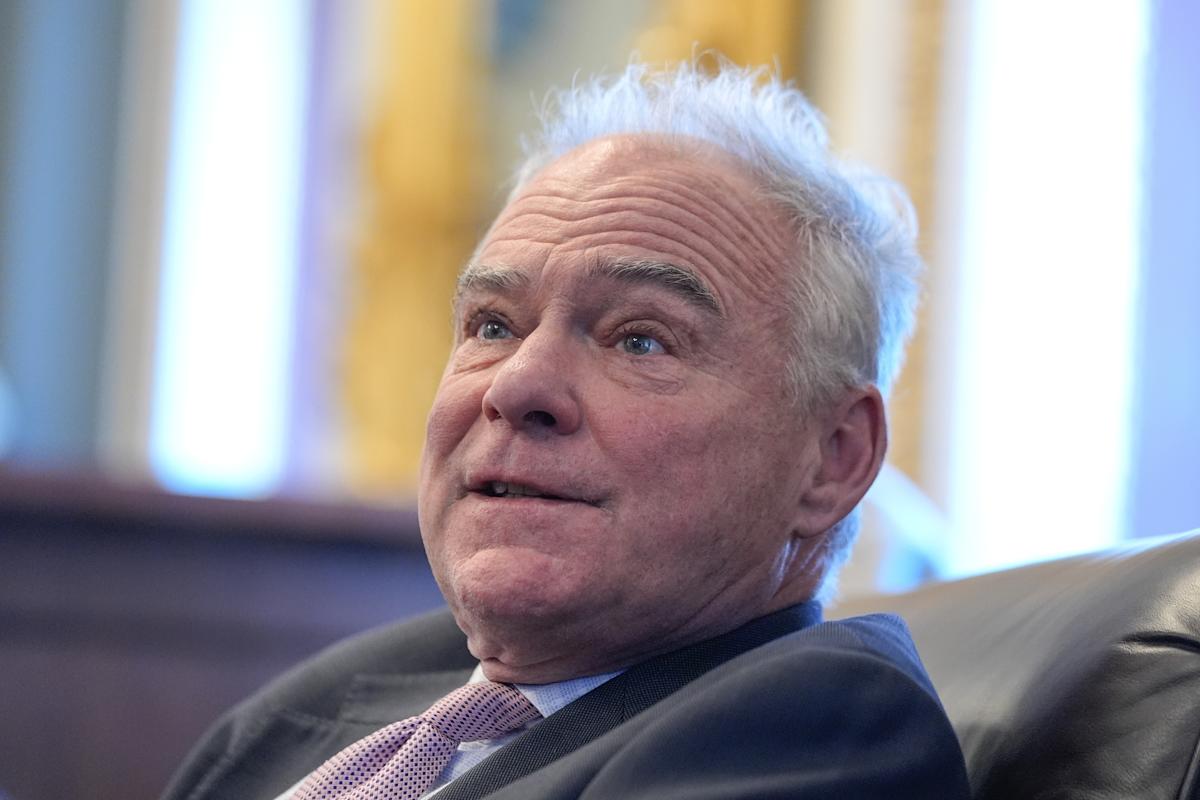
"It's time for Congress to assert its control over military action of this kind, and it's time to get this out of secrecy and put it in the light," said Sen. Tim Kaine, D-Va., who forced the vote.

Republican leaders have said they had no advance notification of theraid early morning Saturdayto seize Maduro and his wife, Cilia Flores, but mostly expressed satisfaction this week as top administration officials provided classified briefings on the operation.

The administration has used an evolving set of legal justifications for the monthslong campaign in Central and South America, fromdestroying alleged drug boatsunder authorizations for the global fight against terrorism to seizing Maduro in what was ostensibly a law enforcement operation toput him on trialin the United States.

Republican leaders have backed Trump.

"I think the president has demonstrated at least already a very strong commitment to peace through strength, especially in this hemisphere," said Senate Majority Leader John Thune, R-S.D. "I think Venezuela got that message loudly and clearly."

Lawmakers' response to the Venezuela operation

Before the vote on the resolution, several Republicans said they were carefully considering their decision, including Sens. Susan Collins of Maine and Thom Tillis of North Carolina, who have previously voted against similar measures.

"We have a history of going in, liberating and leaving. I'm interested in the leaving part," Tillis said.

Asked whether he would support putting troops on the ground in Venezuela, he responded: "Not without congressional authorization."

A vote on asimilar resolution in Novembernarrowly failed to gain the majority needed for passage. Sens. Rand Paul of Kentucky and Lisa Murkowski of Alaska were the only Republicans voting in favor.

Paul, an outspoken proponent of war powers resolutions, acknowledged that Maduro is seen as a "bad guy" and "a socialist and an autocrat." But, Paul added, "The question is about who has the power to take the country to war?"

Some progressive Democrats have suggested inserting language in a defense appropriations bill to limit certain military actions, but that idea met resistance from more pragmatic members of the caucus. Democratic leaders have tried to cast Trump's foreign ambitions as a distraction from the issues that voters face at home.

"The American people are asking what the hell is going on in Venezuela and why is this president, who campaigned on 'America First,' now spending all his time and energy on escapades overseas?" Senate Democratic leader Chuck Schumer of New York said in a floor speech.

The rarely enforced War Powers Act

Congress was once again left in the dark during the military operation in Venezuela, with Trump later confirming that he talked to oil executives but not leaders on Capitol Hill. That reflects abroader patternin Trump's second term, unfolding under a Republican-controlled Congress that has shown little appetite for reasserting its constitutional authority to declare war.

Under the Constitution, Congress declares war while the president serves as commander in chief. But lawmakers have not formally declared war since World War II, granting presidents broad latitude to act unilaterally.

Congress attempted to rein in that authority after the Vietnam War with theWar Powers Resolution,passed over Republican President Richard Nixon's veto. The law requires presidents to notify Congress within 48 hours of deploying forces and to end military action within 60 to 90 days absent authorization — limits that presidents of both parties have routinely stretched.

Democrats argue those limits are being pushed further than ever. Some Republicans have gone further still, contending congressional approval is unnecessary altogether.

Republican Sen. Lindsey Graham of South Carolina, a close Trump ally who traveled with the president aboard Air Force One on Sunday, said he would be comfortable with Trump taking over other countries without congressional approval, including Greenland.

"The commander in chief is the commander in chief. They can use military force," Graham said.

Greenland may further test the limits

Graham's comments come as the administration weighs not only its next steps in Venezuela, but alsoGreenland. The White House has said the "military is always an option" when it comes to a potential American takeover of the world's largest island.

While Republicans have cited Greenland's strategic value, most have balked at the idea of using the military to take the country, instead favoring a potential deal to purchase the country.

Democrats want to get out in front of any military action and are already preparing to respond. Arizona Sen. Ruben Gallego said he is working on a resolution "to block Trump from invading Greenland."

"We must stop him before he invades another country on a whim," Gallego wrote on X. "No more forever wars."

Kaine also said Wednesday that a resolution on Greenland would soon be filed, in addition to Cuba, Mexico, Colombia and Nigeria.

Greenland belongs to a NATO ally, Denmark, which has prompted a much different response from Republican senators than the situation in Venezuela. Paul said Republicans discussed Trump's plans for Greenland at their Wednesday luncheon and he heard "zero support" for taking military action to seize it.

Tillis, a co-chair of the Senate NATO Observer Group, used a Senate floor speech to criticize White House deputy chief of staff Stephen Miller for comments this week that the U.S. should take control of Greenland. Tillis said such remarks were "amateurish" and "absurd."

"This nonsense on what's going on with Greenland is a distraction from the good work he's doing," Tillis said of the president. "And the amateurs who said it was a good idea should lose their jobs."

Senate considers limiting Trump's war powers after Venezuela raid

WASHINGTON (AP) — The Senate is expected to vote on a resolution Thursday that would limitPresident Donald Trump'sabi...
US third-quarter productivity rises at fastest pace in two years

WASHINGTON, Jan 8 (Reuters) - U.S. worker productivity grew at its fastest pace in two years in the ​third quarter as businesses invested heavily inartificial ‌intelligence, depressing labor costs.

Nonfarm productivity, which measures hourly output per worker, accelerated ‌at a 4.9% annualized rate, the Labor Department's Bureau of Labor Statistics said on Thursday.

That was the quickest pace since the third quarter of 2023 and followed an upwardly revised ⁠4.1% growth rate in ‌the second quarter. Economists polled by Reuters had forecast productivity would grow at a 3.0% ‍rate after a previously reported 3.3% pace of expansion in the April-June quarter.

The report was delayed by the 43-day federal government shutdown.

Productivity ​grew at a 1.9% rate from a year ago. ‌Businesses are spending on AI, which economists said could further boost productivity. The jump in productivity helps to explain the gap between strong gross domestic product growth and a lackluster labor market. The economy grew at a robust ⁠4.3% rate in the third quarter. ​In contrast, private job gains averaged ​55,000 per month in the three months through October.

Unit labor costs - the price of labor per ‍single unit of ⁠output - decreased at a 1.9% rate in the third quarter. That followed a 2.9% pace of decline ⁠in the April-June quarter. Labor costs increased at a 1.2% rate from ‌a year ago.

(Reporting by Lucia Mutikani; Editing by ‌Chizu Nomiyama and Paul Simao)

US third-quarter productivity rises at fastest pace in two years

WASHINGTON, Jan 8 (Reuters) - U.S. worker productivity grew at its fastest pace in two years in the ​third quarter as bus...
Farmers block highways across Greece in protest over rising costs and EU trade deal

KASTRO, Greece (AP) — Farmers inGreeceescalated nationwide protests Thursday, launching a 48-hour blockade of major highways, junctions and toll stations over soaring production costs and a contentious European Union trade deal with South American nations.

Tractors lined key routes across the country, halting all traffic except emergency vehicles. Police directed traffic to secondary routes when possible and did not intervene to counter the blockades.

But the country's conservative government has warned that it would not tolerate moreextended blockades.

The country's main highway connecting Athens to the northern city of Thessaloniki was shut in both directions at several points, as farmers demanded stronger state support and the rejection of theEU-Mercosur agreement.

"We've reached a breaking point," Yiannis Baritas, a cabbage farmer and father of five, said at roadblock in southern Greece. "We'll stay here as long as it takes to support our families. They've pushed us to desperation."

The protests, which began in November, initially centered on rising production costs, worsened by a series of crises: a subsidy fraud scandal delaying legitimate payments, and asheep and goat pox outbreak.

The government on Wednesday announced late concessions to try and head off the latest protests, including cheaper electricity rates for farmers and fuel tax rebates.

The proposed trade deal would create a vast free-trade zone between Europe and South American nations including Brazil and Argentina. European farmers fear it would flood the market with cheaper imports — triggering protests in other EU countries as well, includingin France on Thursday.

"If this agreement goes through, Greek agriculture is finished," Vangelis Roubis, a protest organizer, told The Associated Press outside the southern city of Halkida.

"Greece depends on agriculture and tourism. We don't have heavy industry like Germany or France. Production costs here are 300% higher than in Latin America."

Roubis pointed to potatoes as an example: Greek farmers need 35 to 40 cents per kilogram to break even, compared with roughly 10 cents in Brazil.

He added: "We want Greece to join the block of EU nations that rejects this deal."

Kantouris reported from Malgara, Greece. Thanassis Stavrakis and Lefteris Piratakis in Kastro, Greece, contributed.

Farmers block highways across Greece in protest over rising costs and EU trade deal

KASTRO, Greece (AP) — Farmers inGreeceescalated nationwide protests Thursday, launching a 48-hour blockade of major highw...
Delcy Rodriguez is sworn in as Venezuela's interim president after Maduro's capture (Marcelo Garcia / Miraflores Palace via Reuters)

This article is by F. Brinley Bruton reporting from Bogotá, Colombia, and a Caracas-based reporter who is not being identified because of safety concerns.

CARACAS, Venezuela — Political reality is settling in in \Venezuela as the regime once led by deposed President Nicolás Madurotightens its hold on the country.

Many Venezuelans opposed to Maduro's rule were overjoyedwhen U.S. special forces captured himover the weekend, believing this would be quickly followed by a transition to a form of a new government. But for some, these hopes have dimmed in recent days.

No political prisoners appear to have been released, and the government is cracking down on any new signs of dissent,arresting people they said celebratedMaduro's capture by the United States military. The country's security and intelligence apparatus is out in force, with masked paramilitary "colectivos" — armed civilians who support the government — roaming the streets on motorcycles, and military intelligence agents in civilian clothes circulating in vans with an official insignia and setting up roadblocks. The entire top leadership remains intact, with the notable exception of Maduro himself.

The lack of change in governmentwas underlined by a recent classified intelligence assessmentthat determined that top members of the Maduro regime — including former Vice President Delcy Rodríguez, sworn in as interim president on Monday — were best positioned to lead Venezuela's government and maintain stability.

That assessment factored inPresident Donald Trump's dismissalof Maria Corina Machado, the exiled opposition leader and Nobel Peace Prize winner, as the best person to take over running the country, sources told NBC News.

These developments were a gut-punch for Michelle, a resident of Caracas.

"For many years I wished for my country's government to change, and I thought that when that day came I would feel very happy. But that's not the case," said the 34-year-old architect, who moved back to Venezuela last year. "Somehow we will have to pay: either with oil or with our own dignity and sovereignty."

Michelle and others who spoke to NBC News in Venezuela asked not to be fully identified out of fear the government would punish them.

"A dangerous precedent is being created between the United States and Latin America," Michelle said. "We realize that we are just another piece on the board in the struggle between powers, for whom the future of the Venezuelan people lacks relevance compared to the importance of valuable resources, which are worth more than life itself."

Trump has repeatedly referred to his desire for Venezuela, which sits on the world's largest oil reserves, to open its market to American companies. On Tuesday he saidVenezuela would "be turning over" up to 50 million barrels of oilto the U.S., adding that the revenue from the oil will be used to benefit both Americans and Venezuelans.

But pessimism about recent events in Venezuela isn't shared by all opposition supporters, including former political prisoner Luis Mata.

"It's like eating a pizza — they go slice by slice. We have to trust the process," the political activist and human rights defender living in exile told NBC News. Confusion surrounds the fate of the 800 to 900 political prisoners who remain incarcerated after the presidential elections on July 28, 2024.

Mata, 26, was one of the thousands of volunteers who safeguarded vote tallies during the 2024 vote. The Maduro government overturned what independent election observers, rights groups and foreign governments said was a resounding opposition victory.

Days after the election, Mata was detained by police officers as he tried to leave the city where he lived after hearing the government was looking for people who safeguarded the votes. He was charged with seven crimes and spent four months imprisoned in Tocorón jail. He is now outside Venezuela.

"Many say the United States wants to seize the oil, but the United States is a trade ally. The United States supports freedom in Venezuela," he said.

"For me, change is closer than ever. Nicolás is out of the country and will never set foot in Venezuela again," added Mata, who asked that NBC News not reveal his location out of security reasons. "Freedom is about to arrive."

Whether or not "freedom" is about to sweep across Venezuela, the old regime is intent on projecting continuity. A striking symbol of this was when Delcy Rodríguez was sworn in as president and the country's leadership marched shoulder-to-shoulder in front of the National Assembly on Monday.

In the photograph released by the presidential palace, Rodríguez is flanked on one side by her brother and the president of the National Assembly, Jorge Rodríguez. On her right is Diosdado Cabello, who as minister of the interior minister, justice and peace oversees police, counterintelligence forces and the "colectivos" that have struck fear among many Venezuelans. Also surrounding her are seen minister of defense Vladimir Padrino, in full formal military uniform, and a smiling Nicolás Maduro Guerra, the son of the ousted leader.

The image runs counter to repeated statements by Trump asserting that the U.S. is "in charge" in Venezuela.

"They're going after anybody who potentially supported the U.S. mission to get Maduro," James Story, the last U.S. ambassador to Venezuela, said at an event hosted by the Atlantic Council, a Washington-based think tank.

"They're going to go round them up, and they've already rounded up some people. If they're doing that, then we don't run the country," said Story, who served as ambassador from 2018 to 2023.

Marlenis, a domestic worker in Caracas, doesn't seem too worried about Trump's plans for Venezuela. She says that after 25 years of a system that has made her poorer every day, Venezuelans have nothing to lose by trying something different.

"What else can we lose?" she said, while waiting for the bus to go home after work. "If everything goes badly, people are already used to bad things."

Venezuelans hopeful of regime change dismayed as government appears to remain the same

This article is by F. Brinley Bruton reporting from Bogotá, Colombia, and a Caracas-based reporter who is not being identified because of s...
Child at home in Gaza killed by Israeli fire as post-ceasefire deaths mount

DEIR AL-BALAH, Gaza Strip (AP) — A relative said Israeli gunfire on Thursday killed an 11-year-old girl whose family had returned to a designated safe zone, adding to more than 400 deaths reported since a ceasefire was reached to halt fighting in Gaza nearly three months ago.

After shells and shrapnel hit her home in northern Gaza's Jabaliya area, Hamsa Housou was taken to Shifa Hospital, where she was pronounced dead. Outside the hospital mortuary, her uncle Khamis Housou told The Associated Press that the family had returned home on Oct. 11, a day after the ceasefirewent into effect.

Housou, who said his niece had dreams of becoming a doctor, told how early on Thursday he heard screams as Israeli troops combed the area where shells and shrapnel hit. He ran from his apartment toward the home where Hamsa lived and found her lying on the floor.

He carried the girl to the nearest clinic, only to find the ambulance there had a flat tire. They waited about 15 minutes, he said, before taking her to a hospital, where she was pronounced dead.

"They say that there is a ceasefire and that the war on Gaza has stopped. Is this only through the media, while every day there are explosions and fire belts?" he asked. "Shooting does not stop. Where is the ceasefire?"

Khamis Housou said that Falluja, the neighborhood in Jabaliya where the family lives, has been subjected to daily shooting by Israeli troops despite being on the western side of the yellow ceasefire line.

Israel's military did not immediately respond to a request for comment.

It has previously said that military actions since the ceasefire began have been in response to violations of the agreement.

At least 424 Palestinianshave been killedin the nearly three months since the ceasefire took effect, Gaza's Health Ministry, which does not distinguish between civilians and combatants, said Tuesday.

The ministry, part of the Hamas-run government, maintains detailed casualty records that are seen as generally reliable by U.N. agencies and independent experts. The overall Palestinian death toll from the Israel-Hamas war rose to at least 71,391, the ministry said, with another 171,279 wounded.

The phased ceasefire agreement remains in its initial stage as efforts continue to recover the remains of the final hostage in Gaza. Israel's Hostages and Missing Families Forum said on Wednesday that it had been notified that teams had recommenced searching forRan Gvili. The 24-year-old police officer was abducted on Oct. 7, 2023, when Hamas-led militants abducted 251 people and killed around 1,200, mostly civilians, in the attack that triggered the war.

Metz reported from Jerusalem. Bassem Mroue contributed reporting from Beirut.

Child at home in Gaza killed by Israeli fire as post-ceasefire deaths mount

DEIR AL-BALAH, Gaza Strip (AP) — A relative said Israeli gunfire on Thursday killed an 11-year-old girl whose family had ...
After fatal ICE shooting, DHS and Minnesota officials share contrasting accounts

An Immigration and Customs Enforcement agent shot and killed a woman Wednesday during an immigration-related operation in Minneapolis in which she did not appear to be the target, local and federal officials said.

The shooting victim has been named asRenee Nicole Good, 37, a mother and U.S. citizen.

Dueling narratives emerged over what led to the shooting. Department of Homeland Security spokesperson Tricia McLaughlin claimed the woman "weaponized her vehicle, attempting to run over our law enforcement officers in an attempt to kill them."

Minneapolis Mayor Jacob Frey pushed back on DHS' narrative at a news conference Wednesday afternoon, saying, "They are already trying to spin this as an action of self-defense," referring to ICE. "Having seen the video of myself, I want to tell everybody directly that is b---s---."

Witnesses described seeing the woman in the vehicle trying to flee officers when she was shot, disputing the notion that she was trying to run officers over. Police described her as a "middle-aged white woman" who did not appear to be the target of any law enforcement investigation or activity.

Follow live coverage here.

Immigration enforcement officers were conducting targeted operations in Minneapolis when the shooting happened, but it's unclear what operation ICE was conducting in that particular neighborhood.

Several video clips of the incident emerged on social media.

In one video, a gray pickup truck is seen pulling up to a burgundy SUV stopped perpendicular to the truck as someone shouts "get the f--- out of our neighborhood." Agents get out of the truck, and one walks up to the SUV and yanks on the driver's door handle, ordering the driver to get out. The SUV reverses.

Another agent is standing near the front of the SUV as it pulls forward. The agent appears to draw his firearm, and as the SUV drives forward in his direction, he moves backward, shooting into the SUV as it drives off, the video shows.

In another video showing a different angle, the agent appears to be knocked back as the SUV drives forward before it crashes into a parked car and hits a light pole. President Donald Trump attached the video clip showing that angleto a post on Truth Social, saying that the woman driving was "very disorderly, obstructing and resisting" and that it was hard to believe the agent survived the incident.

Homeland Security Secretary Kristi Noem said at a news conference Wednesday evening that the ICE agent was "hit by the vehicle" driven by the woman who was shot. He went to the hospital and was released, she said.

Noem said the officer, whom officials have not yet identified, had been attacked before while on the job.

"The very same officer who was attacked today had previously been dragged by an anti-ICE rioter who had rammed him with a car and dragged him back in June. He sustained injuries at that time, as well," she said.

Noem said at a news conference earlier in the day that the agents' vehicles got stuck in the snow and that they were trying to push them out when the woman "attacked them."

"It was an act of domestic terrorism," she said, without providing further evidence.

At the mayor's news conference, Minneapolis Police Chief Brian O'Hara expressed concern about the tactics used by ICE agents.

"I do not know the exact circumstances of the shooting, but I would tell you, in any professional law enforcement agency in the country ... it's obviously very concerning whenever there's a shooting into a vehicle of someone who's not armed," he said, saying that at times it could be justified but that "most law enforcement agencies in the country have trained very intensely to try and minimize the risk" of using deadly force.

Members of law enforcement work the scene following a suspected shooting by an ICE agent during federal law enforcement operations on Jan. 7, 2026 in Minneapolis, Minnesota.  (Stephen Maturen / Getty Images)

Aidan Perzana, 31, said that he witnessed the incident and that it didn't look like the woman was trying to run over an agent.

"I heard that Noem is trying to say they were trying to run down an officer. There was plenty of space between the officers at that point for the vehicle to make it through," he told NBC News, adding that it looked as though the driver was trying to flee.

Emily Heller, 39, wasn't even dressed when she heard whistles alerting the neighborhood that ICE agents were in the area Wednesday morning. When she walked out to her porch, she said, she saw six or seven ICE vehicles and a person who had parked perpendicular to traffic.

Heller said she saw agents exit their cars and tell the driver to leave, to "get out of here."

"And then they went up to her car and started trying to open her door, and that's when I'm sure she got spooked and tried to flee," Heller said. "So she reversed a little bit and then angled her wheels so she could drive away. And as she was trying to move forward, one of the ICE agents stepped in front of her vehicle and reached across the hood and fired his weapon about three or four times and shot her in the face."

Aidan Perzana's wife, Grace Perzana, 32, said that the family has lived in the neighborhood 2½ years and that "we love it."

"We are really happy here. We have a giant shark statue in our front yard, and our neighbor has a giant T-Rex statue," she said. "There is a lot of community art, a lot of people having barbecues with music in their backyards."

Residents and locals gathered in the street after the shooting, chanting and throwing snowballs in the direction of federal agents, NBC affiliate KARE reported. Law enforcement officers deployed pepper spray and tear gas.

Image: Members of the Border Patrol Tactical Unit use pepper spray on people as they try to leave the scene of a shooting involving a federal immigration officer in Minneapolis, on Wednesday, Jan. 7, 2026. (David Guttenfelder/The New York Times) (David Guttenfelder / Redux Pictures)

DHS stepping up immigration enforcement

Trump has unleashed immigration agents in cities across America, who have been employing increasingly aggressive tactics. The push has ramped up tensions with local officials in some cities and communities that are increasingly protesting the efforts.

In September, an ICE agent fatally shot a man during a traffic stop in the Chicago area. His family called for justice, and local police said the FBI had been investigating the death.

Since they arrived in Minneapolis in early December, ICE officers and agents have arrested roughly 1,400 people, McLaughlin has said. That is a significant increase from the roughly 300 who had been arrested by Dec. 12.

DHS this week sent hundreds more officers and agents to bolster immigration enforcement in Minneapolis, posting on social media that it is waging "the largest DHS operation ever" in Minnesota.

The immigration enforcement operation will add up to 2,100 officers, according to two senior DHS officials. The administration began swelling the numbers Sunday and planned to continue adding forces Wednesday, the officials said. That total encompasses 1,500 enforcement and removal officers and 600 Homeland Security Investigations agents.

At a news conference Wednesday afternoon following the shooting, Frey, the mayor, told ICE agents to "get the f--- out of Minneapolis."

The rush of more enforcement follows the posting of a video by a conservative content creator the day after Christmas that alleged that Somali-run day care centers in Minneapolis were defrauding American taxpayers by taking federal grant money and not providing any services to children.

The FBI surged investigators in the city to look into the allegations soon after the video was posted and HSI has been knocking on Somali businesses' doors since last week. The state of Minnesota concluded from its on-site checks of 10 Somali day care centers targeted in the video that they were operating normally, with children at every site except one, which wasn't yet open to investigators when they arrived to investigate.

Grace Perzana said she didn't believe there were many people of Somali descent on the street where Wednesday's shooting happened, but she said she does have many "Latinx" neighbors.

After fatal ICE shooting, DHS and Minnesota officials share contrasting accounts

An Immigration and Customs Enforcement agent shot and killed a woman Wednesday during an immigration-related operation in...
Ukraine working to restore power in southeast after Russian strikes

By Dan Peleschuk

KYIV, Jan 8 (Reuters) - Ukrainian officials were racing to restore power on Thursday after Russian strikes plunged ​two southeastern regions into near-total blackout overnight, forcing critical ‌infrastructure to rely on reserves.

Moscow has intensified its attacks on Ukraine's energy system as ‌Ukrainian forces fend off Russian advances on the battlefield and Kyiv faces U.S. pressure to secure a peace deal.

Ukrainian Deputy Prime Minister Oleksiy Kuleba said repairs were still ongoing to return heat and ⁠water supplies to more ‌than 1 million consumers in the industrialised region of Dnipropetrovsk.

The energy ministry said nearly 800,000 consumers in ‍the region remained without electricity early on Thursday but that power had been restored to the other affected region, Zaporizhzhia.

Zaporizhzhia governor Ivan Fedorov said it ​was the first time in "recent years" that his region had ‌faced a total blackout, but that officials had been quick to respond.

"A difficult night for the region. But 'light' always wins," he wrote on Telegram on Thursday.

Ukraine's energy ministry said eight mines across the Dnipropetrovsk region had faced blackouts, but that workers had been ⁠evacuated.

Water supplies to the strategic city of ​Pavlohrad and nearby areas could take ​up to a day to repair, said Mykola Lukashuk, head of the Dnipropetrovsk regional council.

Ukraine is facing an ‍impending cold snap ⁠this week, with Prime Minister Yulia Svyrydenko warning late on Tuesday that it would likely compound disruptions to power and ⁠heating.

The energy ministry added on Wednesday that weather conditions had already cut power ‌to some settlements in at least four regions.

(Reporting by ‌Dan Peleschuk; editing by Philippa Fletcher)

Ukraine working to restore power in southeast after Russian strikes

By Dan Peleschuk KYIV, Jan 8 (Reuters) - Ukrainian officials were racing to restore power on Thursday after Russ...


CR GLOW © 2015 | Distributed By My Blogger Themes | Designed By Templateism.com