What each side wants in the Homeland Security shutdown standoff

WASHINGTON – TheDepartment of Homeland Securityhas been shut down for more than two weeks,jeopardizing airport security, disaster relief, coastline safety and even pay for members of the Secret Service as they guarded the president during theState of the Union.
USA TODAY

The Trump administration sent its latest proposal to Senate Democrats to reopen the agency on Feb. 27, but the negotiations between the White House and Capitol Hill have been happening largely behind closed doors.

There's still no end in sightto the funding impasse. Members of both parties have continued talking past each other, at least publicly, in recent days. Patty Murray, the top Democrat on the Senate Appropriations Committee, told reporters Feb. 25 the Trump administration had yet to start negotiating earnestly about demands to reform federal immigration enforcement.

<p style=Another person has been fatally shot by federal law enforcement in Minneapolis, officials said on Jan. 24. The shooting comes just over two weeks after 37-year-old Renee Nicole Good was shot in the head by a federal immigration officer in a residential neighborhood south of downtown. See the scene of a shooting.

" style="max-width:100%; height:auto; border-radius:6px; margin:10px 0;" loading="lazy" /> A person is detained at the scene of a shooting involving federal immigration agents in Minneapolis, Minnesota, January 24, 2026. People gather at the scene of a shooting involving federal agents, in Minneapolis, Minnesota, January 24, 2026. A federal immigration agent stands guard as another detains a person at the scene of a shooting involving federal immigration agents, in Whittier neighborhood, in South Minneapolis, Minnesota, January 24, 2026. People hug each other at the scene of a shooting involving federal immigration agents in Minneapolis, Minnesota, January 24, 2026. People gather at the scene of a shooting involving federal agents in Minneapolis, Minnesota, U.S., January 24, 2026. A man gestures next to federal agents at the scene of a shooting involving federal agents in Minneapolis, Minnesota, U.S., January 24, 2026. Federal agents stand guard at the scene of a shooting involving federal agents, in Whittier neighborhood, in South Minneapolis, Minnesota, U.S., January 24, 2026. Federal agents stand guard at the scene of a shooting involving federal agents in Minneapolis, Minnesota, U.S., January 24, 2026. People gather at the scene of a shooting involving federal agents, in Minneapolis, Minnesota, January 24, 2026. A person with an observer vests joins onlookers after a federal agent involved shooting on January 24, 2026 in Minneapolis, Minnesota. People gather at the scene of a shooting involving federal agents, in Minneapolis, Minnesota, January 24, 2026. People gather at the scene of a shooting involving federal immigration agents, in Minneapolis, Minnesota, January 24, 2026. Federal agents stand guard at the scene of a shooting involving federal immigration agents in Minneapolis, Minnesota, January 24, 2026. Federal immigration agents stand guard at the scene of a shooting involving federal immigration agents, in Minneapolis, Minnesota, January 24, 2026.

Man fatally shot by federal officers in Minneapolis. Photos show the scene

Another personhas been fatally shot by federal law enforcementin Minneapolis, officials said on Jan. 24. The shooting comes just over two weeksafter 37-year-old Renee Nicole Goodwas shot in the head by a federal immigration officer in a residential neighborhood south of downtown. See the scene of a shooting.

Hours later, Senate Majority Leader John Thune, R-South Dakota, contradicted Murray, pointing to the fact that top administration officials and Senate Democrats were trading paper.

"The White House, I think, has been, in good faith, trying to come to the table and work out some of the differences that the Democrats have," he said, "but in ways that don't jeopardize or undermine the ability of our law enforcement officials to do their jobs, and do them in a way that keeps them safe."

It was an indication of how far apart both sides still remain in the shutdown standoff – the third occasion in PresidentDonald Trump's second term during which funding for the 9/11-era Cabinet agency has lapsed.

Lawmakers and administration officials have indicated thousands of employees are working without pay while some critical functions, including at the Federal Emergency Management Agency and Coast Guard, have been scaled back until the shutdown ends. (Immigration enforcement operations have continued as usual.)

Despite those high stakes, the president made sparing mentions of the funding lapse duringhis State of the Union speechon Feb. 24. The lack of attention he brought to the issue underlined just how commonplace shutdowns have become in Washington, especially in the second Trump era.

The longer the situation drags on, the worse it will become. Union leaders for workers at the Transportation Security Administration are already anticipating longer wait times for airline passengers after TSA employees received a fraction of their usual pay on Friday, Feb. 27.

But it doesn't feel like lawmakers are experiencing a critical mass of pressure from their constituents yet to force a deal. And the further away the timeline gets from the fatal shootings of two Minnesotans in January, the more leverage Republicans may sense they have. Washington's attention has already started largely turning away from the politics of immigration enforcement and toward heightened tensions with Iran and Cuba.

Advertisement

Read more:Why travelers should prep for a DHS shutdown with no end in sight

What Democrats want

Senate Minority Leader Chuck Schumer, D-New York, addresses reporters on Capitol Hill in Washington, DC, on Jan. 8, 2026.

Weeks ago, Democrats made 10 central demands to the White House.

Afterthe killing of Alex Pretti, Democrats took a stand to push for a ban on mask-wearing for agents, stricter use-of-force standards and body camera requirements. They also want tightened restrictions around what types of warrants authorize federal officials to arrest people and use force to enter residences. And they want to reestablish a longstanding precedent that Immigration and Customs Enforcement, or ICE, won't target so-called "sensitive locations" such as schools, hospitals and churches.

"All they have to do is agree with our simple ideas that every police department, just about, in America, follows," said Senate Minority Leader Chuck Schumer, D-New York, on Feb. 25. "It's plain and simple."

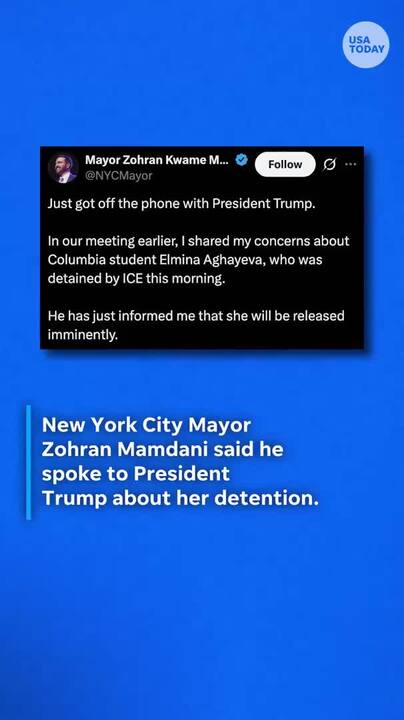
An incident in Schumer's own state a day after he made those remarks may throw a wrench in the negotiations with the White House. According to administrators at Columbia University in New York City, five federal agents misrepresented who they were – falsely saying they were police looking for a missing child – in order to gain access to a residential dorm. Without a warrant, they thendetained a senior named Ellie Aghayevaover concerns about her student visa. She was released later that day after New York City Mayor Zohran Mamdani made a personal appeal to the president.

What Republicans want

House Speaker Mike Johnson, R-Louisiana, speaks during a news conference following a House Republican caucus meeting at the U.S. Capitol on April 8, 2025 in Washington, DC.

Republicans in Congress and the White House are still pushing back on various pieces of Democrats' proposals.

House Speaker Mike Johnsonhas said that appeals for a mask ban and judicial warrant requirements are nonstarters. Face coverings are arguably the biggest sticking point, as Johnson and other GOP lawmakers have said they help prevent federal agents from becoming targets for harassment or threats.

The speaker has, however, indicated an openness to limits on so-called "roving patrols," or random stops of suspicious vehicles, and to bolstering body-worn camera usage. Before the fatal shooting of Pretti by Border Patrol agents upended the bipartisan agreement to fund DHS through the rest of the year, Republicans had already agreed to set aside $20 million for body-worn cameras for immigration enforcement agents.

Schumer's office said Feb. 27 it was closely reviewing the White House's latest counteroffer.

Zachary Schermele is a congressional reporter for USA TODAY. You can reach him by email at zschermele@usatoday.com. Follow him on X at @ZachSchermele and Bluesky at @zachschermele.bsky.social.

This article originally appeared on USA TODAY:Where things stand in the Homeland Security shutdown standoff

What each side wants in the Homeland Security shutdown standoff
WASHINGTON – TheDepartment of Homeland Securityhas been shut down for more than two weeks,jeopardizing airport security, ...
Can you have a gun if you smoke a lot of pot? Supreme Court to decide

WASHINGTON − The Trump administration, which has ardently backed gun rights, will nonetheless try to convince theSupreme Courton March 2 that frequent pot smokerscan be imprisonedfor having a gun.

USA TODAY

The Justice Department will make that argument even as the administration ismoving to reclassifymarijuana to a less dangerous category of drugs – and as cannabis is legal in some form in the majority of states.

That's just one of the noteworthy aspects of thecase, the second involving the constitutional right to bear arms that the justices are deciding this year.

Their rulings could clarify the legal test for gun regulations the court created in recent years that has led to a spike in challenges to gun rules. It's also caused much confusion in lower courts as they try to apply the test.

But the justices could sidestep the Second Amendment aspect and decide that the federal law prohibiting an "unlawful user" of a controlled substance from having a firearm is problematic for other reasons. That might limit the reach of the ban to anyone "addicted" to marijuana or any other drug considered dangerous enough to be regulated by the government, rather than also covering the estimated tens of millions of Americans who recreationally use pot and other drugs.

Here's what you need to know.

What is the case about?

The government is defending its prosecution of Ali Danial Hemani, a dual citizen of the United States and Pakistan whom the FBI had been monitoring because of his alleged connection to Iran's paramilitary Revolutionary Guard. The government has designated the guard a global terrorist group.

During a 2022 search of his Texas home, Hemani told the agents he had a Glock 9mm pistol and also said he used marijuana "about every other day."

Although the government tried to detain Hemani on more serious allegations of criminal activity, he was charged only with having a gun while being an unlawful user of marijuana. That's a felony, punishable by up to 15 years in prison.

How did the lower court rule?

The New Orleans-based 5th U.S. Circuit Court of Appeals said that the gun ban can't be applied to Hemani under theSupreme Court's landmark 2022 ruling that gunprohibitions must be grounded in history that is"consistent with our tradition of gun regulation."

While history and tradition support "some limits on apresentlyintoxicated person's right to carry a weapon," the appeals courtsaid, "they do not support disarming a sober person based solely on past substance usage."

Ken Moore and other customers wait in line, as medical marijuana dispensaries legally opened, in Marietta, Georgia, U.S., April 28, 2023.

Why is the Trump administration defending the law?

In theother gun rights casethe Supreme Court is considering this term, the Justice Department opposes Hawaii's restrictive rules for guns in public places.

"As I said soon after taking office, the Second Amendment is not a second-class right," Attorney GeneralPam Bondiwrote on Xafter filing a Supreme Court brief challenging Hawaii's law. "My Justice Department will continue to be the most pro-Second Amendment Justice Department in history."

More:Supreme Court skeptical of Hawaii gun law, nicknamed 'Vampire Rule'

But Hemani's case, the government argues, "presents narrow circumstances" where the government can meet the "rigorous burden" imposed when limiting gun rights.

"A person regains his ability to possess arms as soon as he stops habitually using drugs," lawyers for the Justice Department wrote in a filing.

The Brady gun control advocacy group was on the opposite side of the Hawaii case but backs the Justice Department's defense of the federal ban on drug users having guns.

"We have major disagreements with the Trump administration on gun violence prevention," said Douglas Letter, the group's chief legal officer. "That doesn't mean they're always wrong."

Supporters of gun control laws rally in front of the U.S. Supreme Court on Dec. 2, 2019.

Is Trump trying to declassify marijuana?

PresidentDonald Trumphasdirected the Justice Departmentto work on reclassifying marijuana as a less dangerous substance.

"The policy of the United States, it appears, is that cannabis may be useful medicine for some patriotic Americans − while also being the spark that twists ordinary people into maniacs who are primed to attack the police," the libertarian Cato Institute and the Rason Foundation wrote in afilingsupporting Hemani.

The Justice Departmenttoldthe Supreme Court that the purpose of the reclassification is to "facilitate medical marijuana and CBD research" while also continuing to restrict the sale of products that pose serious health risks.

Advertisement

Still, Heather Trela at the Rockefeller Institute of Government, a public policy think tank, said the pending rescheduling "does potentially weaken the federal government's argument of the inherent dangers of cannabis use."

If there are medical uses for a controlled substance, the justices might question whether there's a difference between prohibiting gun ownership for those who smoke pot recreationally versus those who use it medicinally, Trelawrote in a previewof the oral arguments.

President Donald Trump speaks before signing a series of executive orders in the Oval Office of the White House on December 18, 2025 in Washington, DC. During the ceremony, Trump signed an order reclassifying marijuana as a schedule III drug.

How often is the law used?

The goverment says it regularly charges more than 300 people each year with having a gun while being either an unlawful user of a controlled substance or a drug addict. The Justice Department said that provision "plays an integral role" in a set of rules designed to keep firearms out of the hands of dangerous or irresponsible people. The Gun Control Act of 1968 was passed in response to the assassinations of President Robert F. Kennedy and Martin Luther King, Jr.

But the National Association of Criminal Defense Lawyers says the provision of the act at issue is being used less for public safety reasons and primarily as a tool for selective prosecutions, leverage in plea bargains or "as a means of incarcerating otherwise law-abiding citizens when the government's primary theory falls short."

Hemani's case, the association said in a afiling, makes their point. The government couldn't make its preferred charges stick, so the law at issue provided an easy fallback "because both drug use and firearm ownership are ubiquitous features of American life."

Josh Hoskins, 32, smokes his 12 inch joint with 16 grams of weed in it that he made using 12 rolling papers during Hash Bash 2023 on the campus of the University of Michigan in Ann Arbor on Saturday, April 1, 2023.

How might the case affect gun rules generally?

In its landmark 2022 decisionstriking down New York's lawrequiring residents to have a good reason to obtain a license to carry a handgun, the Supreme Court created a new "historical tradition" test for firearm rules.

That forced a reassessment of perhaps thousands of Second Amendment rights cases around the country, said Eric Ruben, a law professor at Southern Methodist University.

In a 2024 decision upholding a lawbanning domestic abusers from owning guns, the court tried to clarify how close a modern law has to be with a historical one for it to be constitutional.

But the lower courts are still "all over the place in terms of what you're supposed to be analogizing to," Ruben said.

Adam Winkler, a UCLA School of Law professor, said the confusion has opened the door for judges to impose their own preferences. Judges appointed by Democrat presidents are upholding gun laws even when there's weak historical evidence while Republican-appointed judges are striking down laws for lack of a historical "twin" – even though the Supreme Court has said that's not the standard, Winkler said.

"What we've seen is a lot of judicial activism in this space," he said. "The Supreme Court has not provided much helpful guidance."

The second amendment (the right of the people to keep and bear arms) is spelled on a US flag above a display of firearms for sale in a gun store in Rio Rico, Arizona on Sept. 17, 2025.

Could the court avoid ruling on the Second Amendment?

It's possible, however, that the justices could decide Hemani's case without clarifying their constitutionality test for gun rules.

"This case has been billed as the Court's next big Second Amendment battle," Joel Johnson, a former Justice Department attorney who teaches at Pepperdine Caruso School of Law, wrote in afilingsupporting Hemani. "But it need not be."

Both Johnson and Hemani's lawyers argue that the "unlawful user" provision of the statute should fall because it's impermissibly vague. The law doesn't say, for example, how much pot you have to smoke, how often and how recently to be barred from having a gun.

"It's simply impossible for an ordinary person to understand what is prohibited," said Brandon Buskey, director of the ACLU's Criminal Law Reform Project. The ACLU is one of the legal groups representing Hemani.

"I think the government position is really confusing the idea of drug use with drug abuse," Buskey said.

The Justice Department says someone has to be an "habitual" user to be banned from having a gun. But that's different from what the government has said in the past and is still undefined, Hemani's lawyers argue.

While the Bureau of Alcohol, Tobacco, Firearms and Explosives long interpreted the law to be triggered by a single drug-possession conviction or failed drug test within the past year, it now wants the test to be a "pattern of ongoing use."

That issue makes it hard to predict how consequential the case could be for further refining when gun regulations can pass constitutional muster, said Winkler, author of "Gunfight: The Battle over the Right to Bear Arms in America."

"I don't know if the court will find the vagueness off-ramp attractive," Winkler said. "It's possible that the court could rule on vagueness and thus not have any impact on the Second Amendment doctrine whatsoever."

This article originally appeared on USA TODAY:Can you have a gun if you smoke a lot of pot? Supreme Court to decide

Can you have a gun if you smoke a lot of pot? Supreme Court to decide

WASHINGTON − The Trump administration, which has ardently backed gun rights, will nonetheless try to convince theSupreme ...
What we know about the death of Iranian supreme leader Khamenei

Ayatollah Ali Khamenei, Iran's hardline supreme leader who ruled the country for almost four decades, was killed in Saturday's joint US-Israeli strikes, Iranian state media confirmed Sunday, prompting celebration among Iranians who opposed his rule and fury from pro-regime loyalists.

CNN Iran's supreme leader, Ayatollah Ali Khamenei, speaks during a mourning ceremony for the deaths of Iranian military commanders and scientists, who were killed in Iran's 12-day war with Israel, in Tehran onJuly 29, 2025. - Office of the Iranian Supreme Leader/Wana News Agency/Reuters

An Iranian TV broadcaster broke down in tears as he confirmed Khamenei had reached "martyrdom" in a strike that Fars New Agency said hit his compound in Tehran as he was "carrying out his duties."

The death of the cleric who repressed millions as he sought to exert Iran's influence in the Middle East and beyond appears likely to plunge the Islamic Republic into the most serious crisis since its establishment, with no clear leader to take his place.

One of Iran's most powerful figures, Ali Larijani, Secretary of the Supreme National Security Council, signaled Iran's defiance on Sunday, vowing to "stab" America in the heart in retaliation.

Here's what we know:

How did he die?

Satellite images from Airbusshowedblack smoke rising from the supreme leader's compound in the capital, Tehran, on Saturday. The images appeared to show that several buildings in the compound had been severely damaged by strikes.

Initially, Iran's Foreign Ministry hadinsistedthat Khamenei was "safe and sound," even as his death was announced by both US President Donald Trump and Israeli Prime Minister Benjamin Netanyahu.

"There are many signs" that Iran's supreme leader is "no longer with us," Netanyahu had said Saturday evening, without elaborating.

Smoke billows above the compound of Ayatollah Ali Khamenei in Tehran on Saturday, February 28. - Airbus

Two Israeli sources told CNN that the strikes targeted senior figures, including Khamenei, President Masoud Pezeshkian, and the armed forces' chief of staff Abdolrahim Mousavi.

Trump said one of the aims of the joint US-Israeli attack was regime change, and he called on the Iranian people to rise up against the government.

However, it was unclear whether such change would result from Khamenei's death, which appeared likely to usher in hard-line rule by the Islamic Revolutionary Guard Corps, experts said.

What led to this?

Khamenei's death comes at a time when Iran is arguably at its weakest since he took power in the 1989. Decades of Western sanctions had already left the country isolated and economically battered before US and Israeli strikes in June 2025 dealt his rule a severe blow.

Just six months later, protests that began over economic grievances quickly turned political, spreading across all 31 of the country's provinces within weeks. The regime responded with a brutal crackdown, killing thousands of protesters and prompting a global outcry, including a threat of intervention from the Trump administration.

That intervention came on Saturday, when Trump said the US military was undertaking a "massive and ongoing operation to prevent this very wicked, radical dictatorship from threatening America and our core national security interests."

President Donald Trump monitors US military operations in Iran, February 28, 2026. Portions of the photo have been blurred by the White House. - The White House/X

Who could replace Khamenei?

Larijani, who been a key adviser to Khamenei, said a temporary leadership structure comprising of the president, the head of the judiciary would soon be in place.

Larijani said Iran had assured leaders in the region that it was not after war with them, but would continue to targeted American bases in Middle Eastern countries.

Advertisement

"It must be made clear once and for all that the Americans cannot bully the Iranian nation," he said.

According to Iran's constitution, an interim three-member council — consisting of the president, the head of the judiciary and a jurist of the country's Guardian Council — would be tasked with carrying out the duties of the leader, until an Assembly of Experts appointed a new supreme leader, according to theMiddle East Institute.

Who could lead Iran next remains a mystery, even to those who have removed him. In January, US Secretary of State Marco Rubio said that "no one knows" who would take over if Khamenei was removed.

Reza Pahlavi, the eldest son of Mohammad Reza Pahlavi, the last shah of Iran, said any attempt to appoint a successor to Khamenei "is doomed to fail from the outset."

How are Iranians reacting?

Cheering could be heard in Tehran as news spread about Khamenei's demise, but as morning broke on Sunday, thousands of people gathered in the capital to wave flags and chant "Death to America."

For protesters who fought for regime change in protests across the country this January, prompting a brutal crackdown, Khamenei needed to go.

The regime employed unprecedented levels of violence, with officials framing the demonstrations as a continuation of an Israeli-American conspiracy against the Islamic Republic.

The protests were the biggest since thedeath of 22-year-old Mahsa Aminiwhile in the custody of the religious police in 2022.

Iranian demonstrators protest the US-Israeli strikes, in Tehran on Saturday. - Majid Asgaripour/WANA/Reuters

In one video obtained by CNN from an eyewitness in Tehran on Saturday as reports of Khamenei's death circulated, the voices of two women can be heard chanting, "Death to the Islamic Republic" and "Long Live the shah," in Farsi, before cheers and whistles erupt.

In a similar video, cheers are heard echoing across a residential neighborhood in the city. In cities around the world, members of the Iranian community took to the streets to celebrate a new era in Iran.

How could this impact the wider Middle East?

Khamenei's death has the potential to trigger the greatest shift in regional dynamics since the Hamas-led attack on Israel on October 7, 2023, after which Israeli Prime Minister Benjamin Netanyahu launched a sweeping campaign to eliminate actors hostile to his country across the Middle East — including Iran and its regional proxies.

It's the second time in less than a century that the United States has acted to remove an Iranian leader from power. In 1953, Mohammad Mossadegh, a secular, democratically elected prime minister, was overthrown in an Iranian army coup backed by the CIA and British intelligence after he nationalized the country's oil industry.

Iran's supreme leader, Ayatollah Ali Khamenei, arrives to cast his vote during parliamentary elections in Tehran on March 1, 2024. - Majid Asgaripour/Wana News Agency/Reuters

That event restored Shah Mohammad Reza Pahlavi to the throne and, after the monarch was deposed in the 1979 Islamic revolution, played a central role in the Islamic Republic's anti-US narrative. It regularly cited by Khamenei as a symbol of US imperialism and the reason for his distrust of the West.

Iran is home to a diverse population of more than 90 million, including Persians, Azeris, Arabs, Baloch and Kurds. Under Khamenei's decades-long rule, the Islamic Republic largely managed to contain civil and ethnic unrest.

But with no clear successor, his death would raise serious concerns about the stability of Iran, as well as the wider region, with potential consequences for the global economy.

For more CNN news and newsletters create an account atCNN.com

What we know about the death of Iranian supreme leader Khamenei

Ayatollah Ali Khamenei, Iran's hardline supreme leader who ruled the country for almost four decades, was killed in S...
Middle East airports closed and thousands of travelers stranded after attack on Iran

LONDON (AP) — Theattack on Iranby the United States and Israel disrupted flights across the Middle East and beyond Saturday as countries around the region closed their airspace and key airports that connect Europe, Africa and the West to Asia were directly hit by strikes.

Associated Press Passengers whose flights were cancelled, wait at the departure terminal of Rafik Hariri International Airport in Beirut, Lebanon, Saturday, Feb. 28, 2026, as many airlines canceled flights due to the conflict involving the United States, Israel and Iran. (AP Photo/Hassan Ammar) FILE -Workers load medical aid onto an Air India plane to be flown to India, at Ben Gurion Airport near Tel Aviv, Israel, May 4, 2021. (Menahem Kahana/Pool Photo via AP, File) Travelers check departure times as many flights are cancelled at Beirut Rafik Hariri International Airport in Beirut, Lebanon, Saturday, Feb. 28, 2026, as many airlines canceled flights due to the conflict involving the United States, Israel and Iran. (AP Photo/Hassan Ammar)

Lebanon Israel Iran US

Airports across the Middle East remained closed Sunday as the conflict moved into its second day. Emirates Airlines suspended all flights to and from Dubai until at least Sunday afternoon. The Qatar airport was closed until at least Monday morning, according to Qatar Airways. Israeli airspace also remained closed Sunday.

The closures have stranded tens of thousands of travelers around the world.

Hundreds of thousands of travelers were either stranded or diverted to other airports Saturday after Israel, Qatar, Syria, Iran, Iraq, Kuwait and Bahrain closed their airspace. There also was no flight activity over the United Arab Emirates, flight tracking website FlightRadar24 said, after the government there announced a "temporary and partial closure" of its airspace.

That led to the closure of key hub airports in Dubai, Abu Dhabi and Doha, and the cancellation of more than 1,800 flights by major Middle Eastern airlines. The three major airlines that operate at those airports — Emirates, Qatar Airways and Etihad — typically have about 90,000 passengers per day crossing through those hubs and even more travelers headed to destinations in the Middle East, according to aviation analytics firm Cirium.

Two airports in the United Arab Emirates reported incidents as the government there condemned what it called a "blatant attack involving Iranian ballistic missiles" on Saturday.

Officials at Dubai International Airport — the largest in the United Arab Emirates and one of thebusiest in the world— said four people were injured, while Zayed International Airport in Abu Dhabi said that one person was killed and seven others were injured in a drone strike. Strikes were also reported at Kuwait International Airport.

Though Iran did not publicly claim responsibility, the scope of retaliatory strikes that Gulf nations attributed to Iran extended beyond the American bases that it previously said it would target.

"For travelers, there's no way to sugarcoat this," said Henry Harteveldt, an airline industry analyst and president of Atmosphere Research Group. "You should prepare for delays or cancellations for the next few days as these attacks evolve and hopefully end."

Airlines that are crossing the Middle East will have to reroute flights around the conflict with many flights headed south over Saudi Arabia. That will add hours to those flights and consume additional fuel, adding to the costs airlines will have to absorb. So ticket prices could quickly start to increase if the conflict lingers.

The added flights will also put pressure on air traffic controllers in Saudi Arabia who might have to slow traffic to make sure they can handle it safely. And the countries that closed their airspace will miss out on the overflight fees airlines pay for crossing overhead.

But Mike McCormick, who used to oversee air traffic control for the Federal Aviation Administration before he retired and is now a professor at Embry-Riddle Aeronautical University, said over the next few days these countries might be able to reopen parts of their airspace once American and Israeli officials share with the airlines where military flights are operating and how capable Iran remains at firing missiles.

"Those countries then will be able to go through and say, okay, we can reopen this portion of our space but we'll keep this portion of our airspace closed," McCormick said. "So I think what we'll see in the next 24 to 36 hours how the use of airspace evolves as the kinetic activity gets more well defined and as the capability of Iran to actually shoot missiles and create additional risk is diminished due to the attacks."

But it is unclear how long the disruption to flight operations could last. For comparison, the Israeli and U.S. attack on Iran in June 2025lasted 12 days.

'No one knows'

The situation was changing quickly and airlines urged passengers to check their flight status online before heading to the airport.

Advertisement

Some airlines issued waivers to affected travelers that will allow them to rebook their flight plans without paying extra fees or higher fares.

Jonathan Escott and his fiance had arrived at the airport in Newcastle, England, on Saturday only to find out that his direct flight to Dubai on Emirates airline was canceled, leaving everyone on the flight stuck there.

Escott left to go back to where he was staying with family, about an hour from the airport, but has no idea when he may be able to travel.

"No one knows," Escott said. "No one really knows what's going on with the conflict, really. Not Emirates, Emirates don't have a clue. No one has a clue."

At least 145 planes that were en route to cities like Tel Aviv and Dubai early Saturday were diverted to airports in cities like Athens, Istanbul or Rome, according to FlightAware. Others turned around and returned to where they took off from. One plane spent nearly 15 hours in the air after leaving Philadelphia and getting all the way to Spain before turning around and returning to where it started.

Numerous airlines canceled international flights to Dubai through the weekend, as India's civil aviation agency designated much of the Middle East — including skies above Jordan, Saudi Arabia and Lebanon — as a high-security risk zone at all altitudes.

Air India canceled all flights to Mideast destinations. Turkish Airlines said flights to Lebanon, Syria, Iraq, Iran and Jordan were suspended until Monday and flights to Qatar, Kuwait, Bahrain, the United Arab Emirates and Oman were suspended.

The airline said additional cancellations may be announced, and many other airlines were suspending flights into the region through the weekend.

Travelers advised to be 'very creative'

U.S.-based Delta Air Lines and United Airlines suspended flights to Tel Aviv at least through the weekend. Dutch airline KLM had already announced earlier in the week that it was suspending flights to and from Tel Aviv.

Airlines including Lufthansa, Air France, Transavia and Pegasus canceled all flights to Lebanon, while American Airlines suspended flights from Philadelphia to Doha.

Virgin Atlantic said it would avoid flying over Iraq, meaning flights to and from India, the Maldives and Riyadh could take slightly longer. The airline already was not flying over Iran and said all flights would carry appropriate fuel in case they need to reroute on short notice.

British Airways said flights to Tel Aviv and Bahrain will be suspended until next week, and flights to Amman, Jordan, were canceled Saturday.

"Travelers should anticipate that there will be a lot of disruptions," Harteveldt said. "To be honest, if you haven't left home, chances are you won't be leaving home if you're supposed to travel to or through these destinations for at least several days, if not longer. And if you are returning home, you will have to be very creative about how you get home."

Levy reported from Harrisburg, Pennsylvania, and Funk reported from Omaha, Nebraska. Associated Press writers Adam Schreck in Bangkok, Sam Metz in Ramallah, West Bank, and Melanie Lidman in Jerusalem contributed.

Middle East airports closed and thousands of travelers stranded after attack on Iran

LONDON (AP) — Theattack on Iranby the United States and Israel disrupted flights across the Middle East and beyond Saturd...
How the World Is Reacting to the Attack on Iran

A young Iranian protester shouts anti-U.S. and anti-Israeli slogans during an anti-war protest against the U.S. and Israeli military attacks, in Tehran, on Feb. 28, 2026. Credit - Morteza Nikoubazl—NurPhoto via Getty Images

Time

World leaders reacted with a mix of support, condemnation and urgent calls for restraint after the United States and Israel launched a sweeping military campaign against Iran on Saturday thatkilledSupreme Leader Ayatollah Ali Khamenei.

President Donald Trump announced Khamenei's death in a post on Truth Social, calling it "the single greatest chance for the Iranian people to take back their country."

The U.S. and Israel announced their strikes on the Middle Eastern nation in the early hours of Saturday morning after weeks of Trump threatening Iran over their nuclear deal program. The strikes hit the capital Tehran, as well as Qom, Karaj, Kermanshah, Tabriz and Isfahan, where there is a major nuclear facility.

Read More:Does Trump Have the Legal Authority to Strike Iran? An Expert Explains

In the hours after the initial U.S. and Israeli strikes, Russia and China released statements in support of Iran, while Canada, Australia and Ukraine were among those who expressed support for the U.S. and Israel. Several world leaders urged restraint and de-escalation on both sides moving forward.

Here is a round up of what world leaders have said about the operation that has begun war in the Middle East.

United Kingdom

Prime Minister Keir Starmer chaired a meeting of the government's emergency Cobra committee as the country weighs its response to the attacks and Tehran's retaliation across the Gulf.

It did not participate in the military action, but the country had deployed RAF Typhoons to Qatar to protect the al-Udeid airbase and allied bases across the region.

The UK government on Saturday said in a statement it "does not want to see further escalation into a wider regional conflict." Still, a government spokesperson emphasized that "Iran must never be allowed to develop a nuclear weapon and that is why we have continually supported efforts to reach a negotiated solution."

Starmer released a joint statement with French President Emmanuel Macron and  German Chancellor Friedrich Merz, telling Iran to stop their retaliatory attacks on countries in the Middle East.

"We condemn Iranian attacks on countries in the region in the strongest terms," the joint statement reads. "We call for a resumption of negotiations and urge the Iranian leadership to seek a negotiated solution. Ultimately, the Iranian people must be allowed to determine their future."

Russia

Russia condemned the U.S. and Israel's attack, calling it  "a pre-planned and unprovoked act of armed aggression against a sovereign and independent U.N. member state," in a statement from Russia's Foreign Affairs Ministryposted to Telegram.

It accused the U.S. and Israel of  "plunging the Middle East into an abyss of uncontrolled escalation" and said the attacks could cause a "humanitarian, economic and possibly radiological catastrophe" in the Middle East.

China

China's Foreign Ministry spokespersonsaid on Xthat "Iran's sovereignty, security and territorial integrity should be respected."

"China calls for an immediate stop of the military actions, no further escalation of the tense situation, resumption of dialogue and negotiation, and efforts to uphold peace and stability in the Middle East," the statement continued.

France

In addition to the joint statement with the leaders of the United Kingdom and Germany, French President Emmanuel Macronsaid on X, in a post originally in French, that the escalation "is dangerous for all."

"It must stop," he added. "The Iranian regime must understand that it now has no other option but to engage in good faith in negotiations to end its nuclear and ballistic programs, as well as its regional destabilization activities. This is absolutely necessary for the security of all in the Middle East."

He called for an "urgent" meeting of the United Nations Security Council.

European Union

Ursula von der Leyen, the European Union's chief executive, saidin a statement on social mediathat the EU has "consistently promoted diplomatic efforts aimed at addressing the nuclear and ballistic programmes through a negotiated solution.""We call on all parties to exercise maximum restraint, to protect civilians, and to fully respect international law," she said.

Canada

Prime Minister Mark Carney saidin a statement on Xthat Canada supports the U.S. "acting to prevent Iran from obtaining a nuclear weapon and to prevent its regime from further threatening international peace and security."

"Canada's position remains clear: The Islamic Republic of Iran is the principal source of instability and terror throughout the Middle East, has one of the world's worst human rights records and must never be allowed to obtain or develop nuclear weapons."

Australia

Australia's Prime Minister, Anthony Albanese, said in a statement on X that the country backs the U.S. in their military operation.

"We support the United States acting to prevent Iran from obtaining a nuclear weapon and to prevent Iran continuing to threaten international peace and security," he said.

The country also updated their travel recommendations to "Do Not Travel" for Lebanon and Israel.

Pakistan

Pakistan's Ministry of Foreign Affairs released astatementSaturday condemning what it calls "unwarranted attacks against the Islamic Republic of Iran," as well as retaliatory attacks by "Iran against the brotherly countries of Saudi Arabia, Bahrain, Jordan, Kuwait, Qatar and the UAE."

Advertisement

The Ministry confirmed that a Pakistani national was killed in the UAE during the attacks.

"We urge all sides to refrain from any further actions that may undermine the security and territorial integrity of other regional countries," the statement read.

India

India's Ministry of Foreign affairssaid in a statementthat the country is "deeply concerned at the recent developments in Iran and the Gulf region."

"We urge all sides to exercise restraint, avoid escalation, and prioritise the safety of civilians," it continues. "Dialogue and diplomacy should be pursued to de-escalate tensions and address underlying issues. Sovereignty and territorial integrity of all states must be respected."

Spain

Spain Prime Minister Pedro Sánchezcalled on Xfor " immediate de-escalation and full respect for international law," decrying the potential for another "prolonged" war in the Middle East.

"We reject the unilateral military action by the United States and Israel, which represents an escalation and contributes to a more uncertain and hostile international order," he said. "We likewise reject the actions of the Iranian regime and the Revolutionary Guard."

Saudi Arabia

The Saudi Foreign Affairs Ministry condemned Iran's retaliatory strikes across the region in a statement.

"The Kingdom of Saudi Arabia condemns and denounces in strongest terms the blatant Iranian aggression and the flagrant violation of the sovereignty of the U.A.E., Bahrain, Qatar, Kuwait, and Jordan,"  the statement reads.

United Arab Emirates

After the UAE was hit by retaliatory strikes from Iran, its Ministry of Foreign Affairscondemnedits neighbor in a statement, calling the strikes a  "flagrant violation of national sovereignty and a clear breach of international law and the Charter of the United Nations."

"The UAE underscored that it retains its full and legitimate right to respond to these attacks in a manner that safeguards its sovereignty, national security, and territorial integrity, and ensures the safety of its citizens and residents, in accordance with international law," the statement continued.

Oman

Oman's Foreign Minister Badr Al Busaidisaid on XSaturday after the attacks that he was "dismayed."

"Active and serious negotiations have yet again been undermined," said Al Busaidi, who has been a key mediator in recent U.S.-Iran nuclear talks. "Neither the interests of the United States nor the cause of global peace are well served by this. And I pray for the innocents who will suffer."

United Nations

Volker Türk, the UN's Human Rights Commissioner, criticized both the strikes against Iran, and Iran's retaliatory strikes."As always, in any armed conflict, it is civilians who end up paying the ultimate price," he said in a statement on Saturday. "I call for restraint and implore all parties to see reason, to de-escalate, and for a return to the 'negotiating table' where they had been actively seeking a solution only hours earlier."

United Nations Secretary-General António Guterres also condemned military action on all sides of the conflict.

"I call for an immediate cessation of hostilities & de-escalation. Failing to do so risks a wider regional conflict with grave consequences for civilians & regional stability," Guterressaid on X

He also pointed out in the post that the UN's Charter prohibits "the threat of the use of force against the territorial integrity or political independence of any state, or in any other manner inconsistent with the Purposes of the United Nations."

Ukraine

Ukrainian President Volodymyr Zelensky condemned Iran for being "Putin's accomplice" in a poston X reactingto the escalation.

"It is important that the United States is acting decisively. Whenever there is American resolve, global criminals weaken. This understanding must also come to the Russians."

Albania

Albania Prime Minister Edi Ramasaid on Xthat Albania stands "firm with Israel and with the peace-seeking brotherly Arab countries" and that it supports the United States' military contribution.

"We fully endorse every decisive effort to prevent once and for all the murderers in Tehran from acquiring nuclear or any other military capacity to harm Israel or any other peace-loving nation in the Middle East," Rama said. "Terrorism must be named. And once named, it must be stopped."

Hungary

Hungarian Prime Minister Viktor Orbán, a Trump ally in Europe, immediately expressed concerns for how the strikes would impact oil prices. The strikes, he toldreporters, "doubled the importance of the Friendship oil pipeline," which runs through Ukraine. Shipments of Russian oil have been disrupted since January, and Orbán has accused Ukraine ofimposingan "oil blockade."

Kuwait

Kuwait's Ali Al Salem Air Base, which is used by the U.S. military, was also targeted as part of Iran's military retaliation. Kuwait released a statement condemning the Iranian attacks on their soil and asserted their right to respond to the "brazen attack" via Article 51 of the UN Charter.

Qatar

In similar statements to Kuwait and UAE, Qatar condemned Iran's retaliatory attacks and reaffirmed their own right to respond, as per international law.

"The State of Qatar expresses its strong condemnation of the targeting of Qatari territory with Iranian ballistic missiles, considering it a flagrant violation of its national sovereignty, a direct infringement on its security and territorial integrity, and an unacceptable escalation that threatens the security and stability of the region," the statement,posted to X, read.

Lebanon

Lebanese Prime Minister Nawaf Salamsaid on Xthat he "will not accept anyone dragging the country into adventures that threaten its security and unity."

Contact usatletters@time.com.

How the World Is Reacting to the Attack on Iran

A young Iranian protester shouts anti-U.S. and anti-Israeli slogans during an anti-war protest against the U.S. and Israe...
Death toll rises to 22 after cargo plane carrying money crashes near Bolivia's capital

LA PAZ, Bolivia (AP) — The death toll rose to 22 on Saturday from thecrash of a military planecarrying 18 tons of new banknotes a day earlier near Bolivia's capital, damaging about a dozen vehicles and scattering bills on the ground, a police commander said Saturday.

Associated Press

Another 29 people were injured, mostly passengers traveling on public transportation where the plane crashed. Among the dead are 12 men, including one crew member, six women and four children, police commander Mirko Sokol said.

Forensic investigators were still recovering remains from the wreckage Saturday. The injured were taken to clinics in the city of El Alto, near La Paz, where the airport is located.

Defense Minister Marcelo Salinas said Friday that the Hercules C-130 plane was transporting newly printed Bolivian currency from the eastern city of Santa Cruz when it "landed and veered off the runway" at an airport in El Alto, a city adjacent to La Paz, before ending up in a nearby field. Firefighters managed to put out the flames that engulfed the aircraft.

Advertisement

Images on social media showed debris from the aircraft, destroyed cars and bodies scattered on the road. According to fire chief, Pavel Tovar, at least 15 vehicles were damaged.

The plane belonging to the Bolivian air force, was transporting money to La Paz and images on social media showed people rushing to collect the bills scattered at the crash site, while more than 500 soldiers and 100 police officers tried to disperse them, according to official reports.

To avoid more looting, police and military personnel burned the cash boxes in the presence of Central Bank President David Espinoza, who said the bills "have no legal value because they never entered circulation," without clarifying.

Espinoza did not specify the amount of money being transported, but he said the banknotes had arrived in Santa Cruz from abroad.

Death toll rises to 22 after cargo plane carrying money crashes near Bolivia’s capital

LA PAZ, Bolivia (AP) — The death toll rose to 22 on Saturday from thecrash of a military planecarrying 18 tons of new ban...
Takeaways from AP's report on the ICE detention center holding children and parents

Many Americans were alarmed recently when immigration officers in Minneapolistook custody of a 5-year-old boyand sent him and his father to a Texas detention center. But he was no outlier.

Associated Press This image provided by the family in February 2026 shows a drawing made by a 13-year-old Colombian girl when she was detained at South Texas Family Residential Center in Dilley, Texas, where the Trump administration is holding immigrant families. (AP Photo) This image provided by the family in February 2026 shows a drawing made by a 13-year-old Colombian girl when she was detained at South Texas Family Residential Center in Dilley, Texas, where the Trump administration is holding immigrant families. (AP Photo) Andrea Armero, left, watches her daughter play on monkey bars in a park in Colombia, on Wednesday, Feb. 18, 2026. (AP Photo/Fernando Vergara)

US-Immigration-Detaining-Children

The government has been holdinghundreds of children and their parentsat the Dilley Immigration Processing Center, about 75 miles south of San Antonio. Some have been detained for months.

The Department of Homeland Security has strongly defended the quality of care and conditions there.

Here are key findings from an Associated Press report on how the Trump administration's aggressive immigration enforcement is shaping life inside the facility.

Detention of children has been rising

U.S. Immigration and Customs Enforcement booked more than 3,800 children into detention during the first nine months of the new Trump administration, according to an AP analysis of data from the University of California, Berkeley's Deportation Data Project.

On an average day, more than 220 children were being held, with most of those detained longer than 24 hours sent to Dilley. More than half of Dilley detainees during the early part of the Trump administration were children, the AP analysis found.

Sincebeing reopened last spring, the number of people detained at Dilley has risen sharply and reached more than 1,300 in late January, according to researchers. Nearly two-thirds of children detained by ICE in the early months of the Trump administration were eventually deported.

ICE holds many children longer than 20-day limit

The government is holding many childrenat Dilley well beyond the 20-day limitset by a longstanding court order.

Advertisement

"We've started to use 100 days as a benchmark because so many children are exceeding 20 days," said Leecia Welch, the chief legal director at Children's Rights, who visits Dilley regularly to ensure compliance. In a visit this month, Welch said she counted more than 30 children who had been held for over 100 days.

Many settled families among those currently detained

When the Obama administration opened Dilley in 2014, nearly all the families detained there had recently crossed the border from Mexico.

But many of those now sent to the facility have lived in the U.S. several years, according to lawyers and other observers, meaning children are being uprooted from the familiarity of schools, neighborhoods and many of the people who care for them.

Parents Allege Deficient Care

Parents and children recounted stressful conditions inside Dilley, including experiences that raise questions about the quality of care being provided.

A 13-year-old girl cut herself with a plastic knife after staff withheld prescribed antidepressants and denied her request to join her mother down the hall, the mother told the AP.

Another mother said when her 1-year-old daughter developed a high fever and vomited, medical staff repeatedly offered only acetaminophen and ibuprofen before she was eventually admitted to hospitals with bronchitis, pneumonia and stomach viruses. ICE disputed her account, saying the baby "immediately received proper care."

Other families described more routine problems, like the difficulty of getting children to sleep in quarters where lights are kept on all night and of stomach aches caused by foul drinking water.

Both adults and children described the often overwhelming stress of being detained that has caused many to despair.

ICE, DHS defend Dilley

DHS did not respond to detailed questions about Dilley submitted by the AP. But both DHS and ICE sharply refuted allegations of poor care and conditions in statements issued this week."The Dilley facility is a family residential center designed specifically to house family units in a safe, structured and appropriate environment," ICE Director Todd M. Lyons said in a statement.Dilley provides medical screenings and infant care packages as well as classrooms and recreational spaces, ICE said.Once in full operation, Dilley is expected to generate about $180 million in annual revenue for CoreCivic, the for-profit prison company that operates it under contract with ICE, according to the company's recent filing with securities regulators.In response to questions from the AP, a CoreCivic spokesman said no child at Dilley "has been denied medical treatment or experienced a delayed medical assessment." The company said detainees receive comprehensive care from medical and mental health professionals.Questions about oversightThe increased detention of families comes as the Trump administration has gutted an office responsible for oversight of conditions inside Dilley and other facilities.In years past,investigators found problems at Dilley, including consistently inadequate staffing and disregard for the trauma caused by the detention.A special committee recommended that family detention be discontinued except in rare cases, and the Biden administration began phasing it out in 2021. Dilley was closed in 2024. But in reopening it, the Trump administration has completely reversed course.

DHS did not respond to detailed questions about Dilley submitted by the AP. But both DHS and ICE sharply refuted allegations of poor care and conditions in statements issued this week.

"The Dilley facility is a family residential center designed specifically to house family units in a safe, structured and appropriate environment," ICE Director Todd M. Lyons said in a statement.

Dilley provides medical screenings and infant care packages as well as classrooms and recreational spaces, ICE said.

Once in full operation, Dilley is expected to generate about $180 million in annual revenue for CoreCivic, the for-profit prison company that operates it under contract with ICE, according to the company's recent filing with securities regulators.

In response to questions from the AP, a CoreCivic spokesman said no child at Dilley "has been denied medical treatment or experienced a delayed medical assessment." The company said detainees receive comprehensive care from medical and mental health professionals.

Questions about oversight

The increased detention of families comes as the Trump administration has gutted an office responsible for oversight of conditions inside Dilley and other facilities.

In years past,investigators found problems at Dilley, including consistently inadequate staffing and disregard for the trauma caused by the detention.

A special committee recommended that family detention be discontinued except in rare cases, and the Biden administration began phasing it out in 2021. Dilley was closed in 2024. But in reopening it, the Trump administration has completely reversed course.

Takeaways from AP's report on the ICE detention center holding children and parents

Many Americans were alarmed recently when immigration officers in Minneapolistook custody of a 5-year-old boyand sent him...


CR GLOW © 2015 | Distributed By My Blogger Themes | Designed By Templateism.com